
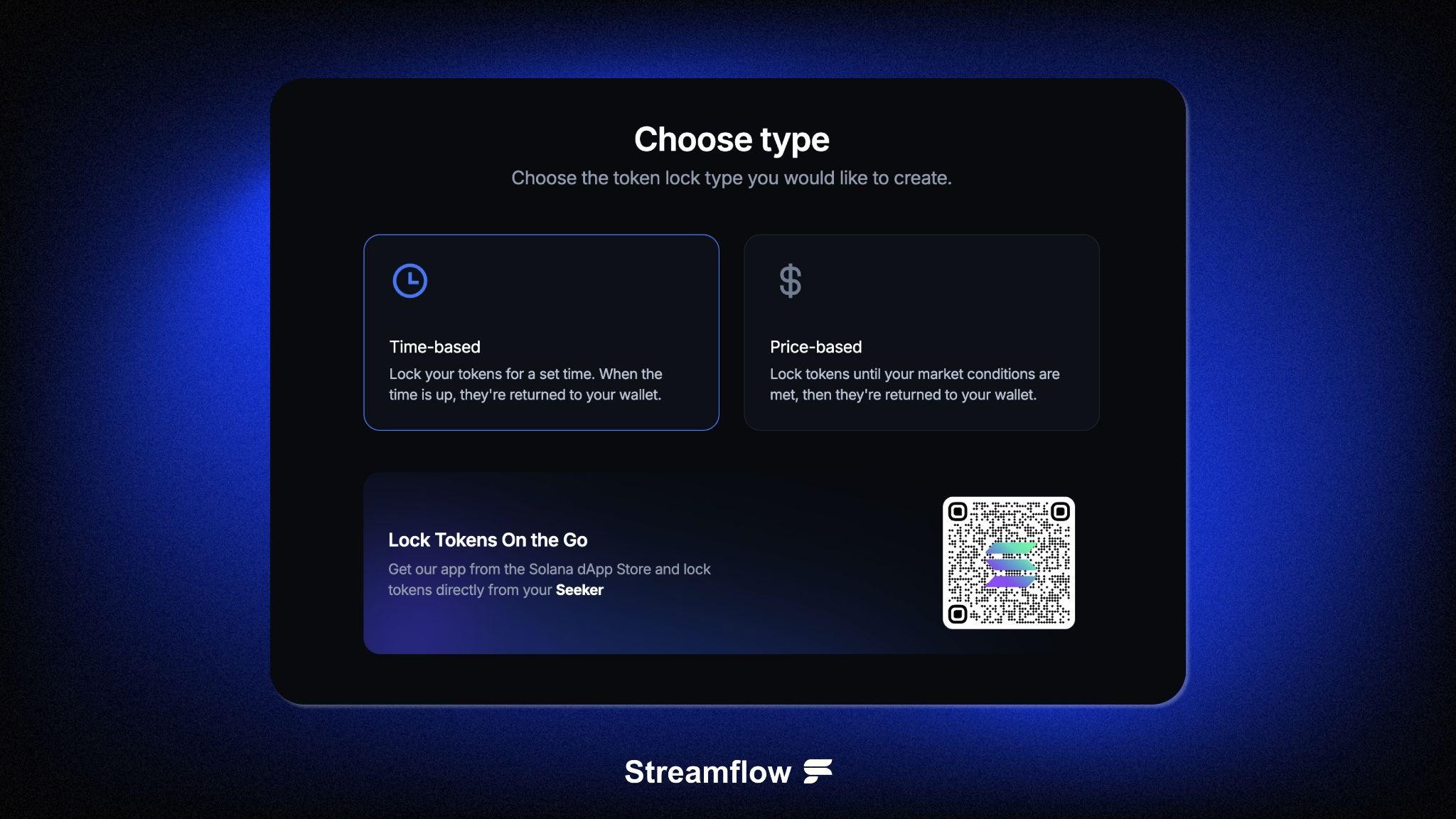
Managing token allocations across teams, investors, and treasury funds usually means juggling spreadsheets, manual verification, and plenty of trust-based conversations. Streamflow Token Locks closes that gap by putting supply commitments on-chain where anyone can verify them.
What Are Token Locks and Why Do Projects Need Them?
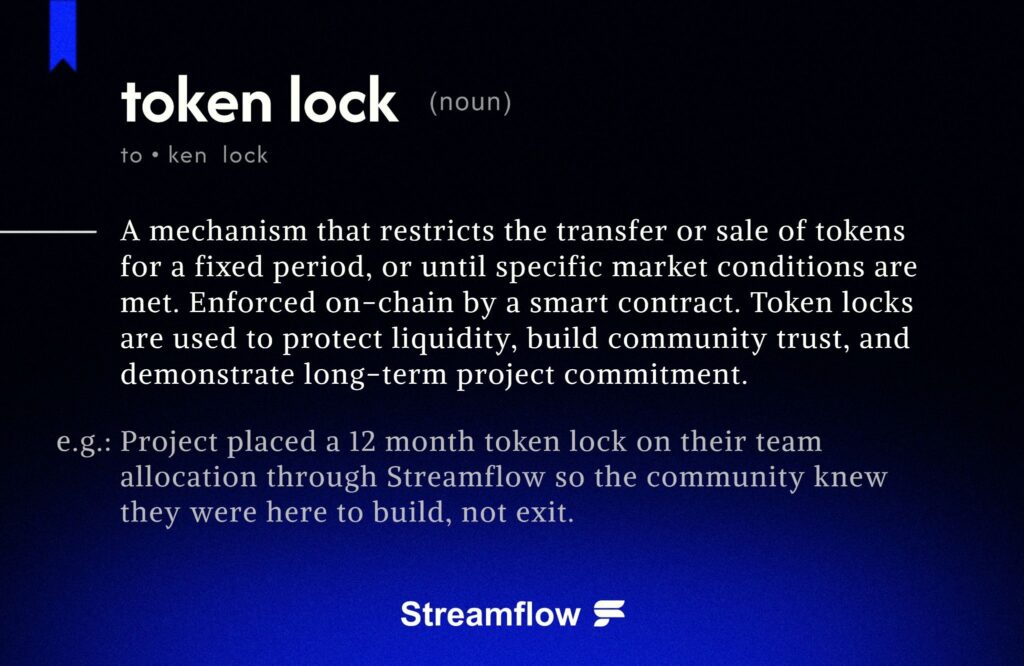
A token lock is a straightforward rule-based restriction that prevents assets from moving until specific conditions are met. Usually that’s time, but it can also be price-based or tied to performance metrics. The key difference from vesting is simplicity: token locks release everything at once on a predetermined date or condition, while vesting schedules gradual releases over time.
For crypto projects, token locks serve a specific purpose. They signal long-term commitment. When investors and communities see that team tokens are locked, treasury funds are restricted, or liquidity is frozen until a clear date, it reduces uncertainty. No sudden dumps. No surprise supply shocks. Just predictable, verifiable tokenomics.
Streamflow Brings Audited Infrastructure to Token Locking
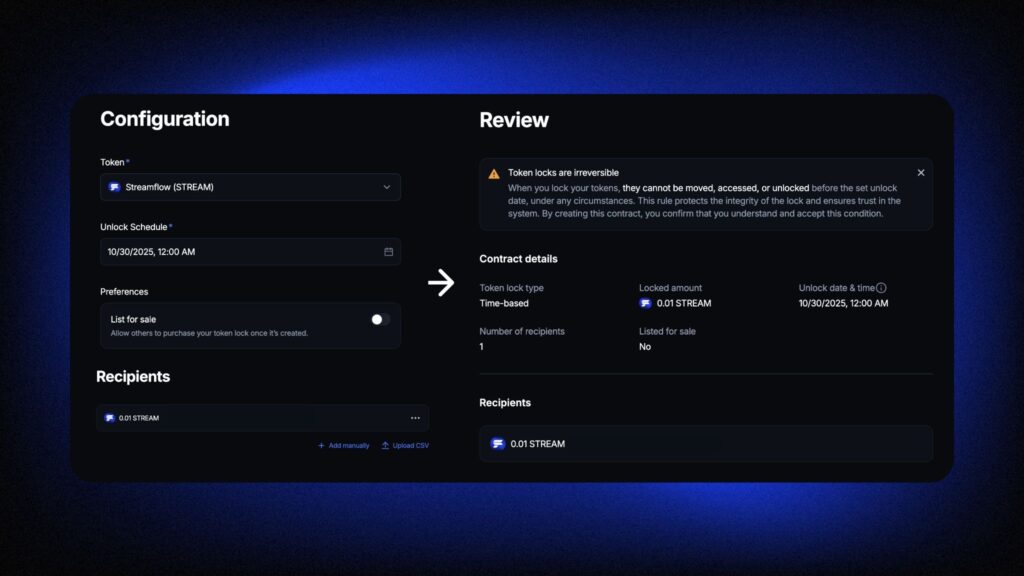
Streamflow token locking infrastructure is built around three core ideas: security, transparency, and ease of use. The platform uses audited smart contracts, meaning the locking mechanism itself has been reviewed by major security firms. That matters when you’re talking about assets.
Once a lock is created, anyone can view it on-chain. No black box. No “trust us” messaging. Token holders, investors, and community members get a permanent, inspectable record of what’s locked, for how long, and under what conditions it unlocks. That on-chain proof becomes part of your project’s credibility.
Token Locks Support Real Project Needs
Streamflow supports locking any SPL token on Solana, including LP tokens, team allocations, treasury funds, and custom token allocations. The unlock conditions are flexible too. You can set fixed-date unlocks, price-based triggers tied to market performance, or custom logic based on how your project works.
Many teams pair token locks with other operations. A project might lock tokens at launch, then set up vesting for team tokens, and handle treasury payouts through recurring streams. Everything stays coordinated on one platform, reducing coordination overhead and operational risk.
Custom Branded Portals for Community Transparency
Streamflow also offers white-label dashboards. Instead of sending token holders to the in app locking interface, projects can offer a custom, branded experience. It’s a small detail that improves user experience and keeps the locking mechanism clearly associated with your project.
The dashboard makes it easy for communities to verify locked allocations and understand unlock timelines. That transparency builds trust, especially during launches when community sentiment is highest.
Why Transparency Matters Now
The crypto industry has moved toward verifiable infrastructure. Projects that can point to on-chain proof of their commitments have a measurable advantage in community trust and institutional interest. A token lock backed by audited contracts and published on a transparent dashboard isn’t just a tool, it’s a signal that your project takes its commitments seriously.
For teams ready to add token locks to their operations, Streamflow’s platform makes it straightforward: create a lock, set conditions, share the proof link, and let automation handle the release. The community gets certainty. Your project gets credibility.
Ready to lock tokens? Explore Streamflow at streamflow.finance
